
Georgia’s librarians are being silenced and threatened for doing their jobs. If passed this legislative session, Senate Bill 74 would make matters worse, opening the door to criminal charges for library workers if someone claims a book is “harmful” to minors.
Complaints by extremists can quickly become punishment. We spoke with two librarians: one faced backlash for wearing a rainbow T-shirt; another left the profession early as book challenges and political pressure mounted.
SB 74 would deepen the harm already inflicted on the profession and public spaces. It deputizes librarians to be agents of state-sponsored censorship, providing them with immunity only if they comply with vague rules set by library boards.
Lawmakers say SB 74 is about protecting children. Actually, it advances book bans and puts books about LGBTQ+ people and communities of color at risk. When librarians fear jail time, they are more likely to remove books.
SB 74 has passed a House committee and could move forward at the discretion of the Speaker of the House, Rep. Jon Burns. Read below about how harmful laws have impacted Georgians, then tell the speaker you oppose any criminalization of library workers.
(The librarians’ names have been changed to protect their privacy.)
‘Allowed to Exist’
Olivia began working at a county library in east-central Georgia in 2017. She started part-time right after high school and became a full-time employee after several years. As a library assistant, she organized materials, planned programs, and more.
Last fall, she wore a rainbow “Read with Pride” T-shirt to a public library board meeting. Soon after, her supervisor told her not to wear it again. A board member had complained in an email, questioning her motives and suggesting she was opposing the board.
Her bosses initially said she could not wear that specific shirt. Then the rule changed. No staff could wear graphic T-shirts at all.
“I had worn graphic tees for years,” she said. “Suddenly it was a problem.”
She later learned through open records requests that some officials had called for her termination. She filed an HR complaint after seeing emails with derogatory comments about LGBTQ+ people. HR dismissed her concerns and admitted they did not speak to board members during an investigation.
In February 2025, Olivia received a two-sentence email stating she would no longer manage the library’s social media. After speaking with a colleague about the change, she was reported to management. At a meeting the next month, she had a panic attack while her bosses questioned her about the conversation. She was later told even her reaction was “disrespectful.” She also learned that a board member had publicly made insulting remarks about LGBTQ+ people and referred to her specifically.
“I didn’t feel safe in the building anymore,” she said. “I didn’t feel like I was allowed to exist there.”
Olivia says the job once felt like a safe haven. Her coworkers were the first people she came out to as queer. In the end, she resigned and found work elsewhere.
Despite the hardship, she stayed in the profession. She believes libraries must remain inclusive and accessible to everyone. She’s speaking out because lawmakers are attempting to pass SB 74 again this session. The sponsors claim the bill will not harm libraries. Olivia’s experience tells a different story.
“Libraries are supposed to be for everyone,” she said. “We can’t let them take that away.”
An Unplanned Early Retirement
Charlotte retired in June 2024 from an Atlanta metro school district. She wasn’t ready to end her career, but quit because state lawmakers continue to target librarians with harmful bills like SB 74 and books from diverse authors.
She said books taught her empathy and provided insights into different experiences, helping her grow and flourish when she was younger. This passion for books blossomed over the years, leading her to the profession.
She feels strongly about the importance of education through reading and recites the lessons of Dr. Rudine Sims Bishop, often referred to as the mother of multicultural children's literature, who called books “mirrors, windows, and sliding glass doors.” In other words, readers must have experiences where they “see” themselves, consider different perspectives, and are able to “step into” the lived experiences of others.
Calling upon her own childhood, Charlotte said books can help kids explore ideas and feel less alone. Librarians are educated to help students choose books, she said, which can affirm and validate them, but pressure from special interest groups and, by extension, administrators negatively impacted local libraries’ roles as bastions of democracy, particularly since the passage of Senate Bill 226 in 2022. The law prohibited materials in Georgia schools that are “harmful to minors.”
“I noticed as that bill and others that followed were coming out (of the Georgia Legislature), my principal would say things like, you might want to put this away. I’m not even talking solely about books. I had a rainbow Lego set, and they wanted it removed, saying they just don't want me to be a target. She meant well, but it became part of the silencing.”
Librarians regularly examine their collections to remove outdated items or rearrange others based on age-appropriateness. Because of pressure from special interest groups, higher-ups ignore established expertise and remove books from shelves. It happened in the county in 2023 and 2024 and continues today.
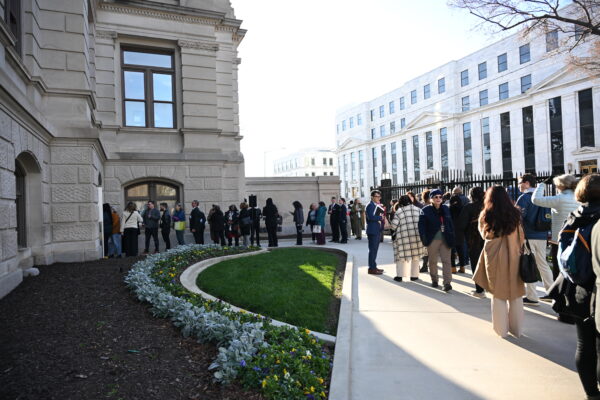
Some community members and parents objected to the removal of the books, lining the streets in one school district of the county and demanding that school officials “give our kids the freedom to read,” she said.
Working in the field since the 1990s, Charlotte said a conversation with a parent used to suffice. She worked with parents to keep inappropriate books away from their children, like an anxious girl whose condition worsened when she read historical fiction. Groups such as Moms for Liberty have erased those relationships. They gather talking points, contact powerful people, and use their free time to divert conversations away from education, pushing their agendas.
“When they’re scaring people enough to leave the profession and preventing others from entering it, they’re breaking up education from the inside. They’re making people fearful of speaking up in favor of literacy and lifelong learning, and it’s a shame.”