2026 Legislative Report
Introduction
The 2026 legislative session marked the second year of Georgia's two-year lawmaking cycle, known as a “biennium.” With last year’s carryover legislation returning to the forefront and new proposals emerging in response to shifting political pressures, this session underscored how much can change in a year.
In 2025, lawmakers intensified attacks against the LGBTQ+ community, including through bills that would ban diversity, equity, and inclusion in schools and proposals that would criminalize librarians for failing to remove books deemed “harmful to minors.” This year, their focus shifted to increasing penalties for protest-related offenses, regulating AI-generated content, and controlling minors' access to social media.
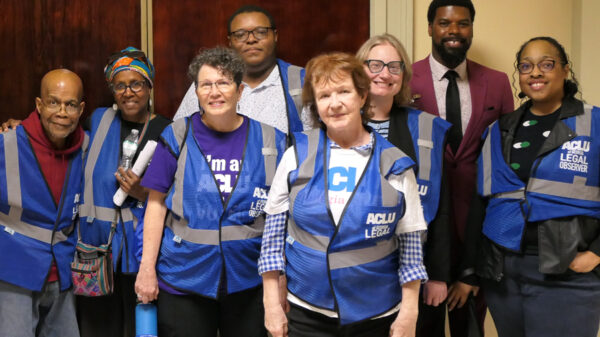
Community members across Georgia mobilized in person and online to challenge harmful policies and advance democracy, liberty, and justice. From testifying in committee hearings to contacting lawmakers, the ACLU of Georgia and our supporters refused to be sidelined. This report highlights key developments from the 2026 session, capturing both the progress made and the work that remains to protect civil liberties and rights across the state.
Session by the Numbers
Civil Rights
Georgia Civil Rights Act of 2025
Position: Support
Status: Did Not Pass
Summary: Strengthens protections against discrimination in everyday life. It helps ensure that people are not treated disparately at work, in housing, or in public accommodations based on their race, color, religion, sex, gender identity (SB 320), sexual orientation, age, disability, familial status, or national origin. The law also takes steps to promote fairness in policing by banning racial profiling and requiring data collection on traffic stops. The ACLU of Georgia supports these bills because they strengthen constitutional rights and promote fairness.
Speech & Privacy

Librarian Criminalization
Position: Oppose
Status: Did Not Pass (Victory)
Summary: Criminalizes librarians for failing to remove materials that could be considered harmful to minors from their libraries. It amends Georgia law by removing the current exemption, which prevents libraries operated by the state, or any school, college, or university, from being charged with the distribution of harmful materials to minors. The ACLU of Georgia opposes SB 74 because it threatens the constitutional right of free speech and imposes undue criminal liability on librarians, creating a chilling effect that undermines the very purpose of libraries as centers of learning and exploration.
Anti-DEI in Schools
Position: Oppose
Status: Did Not Pass (Victory)
Summary: HB 127 originally pertained to increasing the number of accumulated sick leave days for teachers. However, its language was replaced with language from SB 120, which prohibits schools from promoting, supporting, or maintaining any programs or activities that advocate for diversity, equity, and inclusion. Institutions that fail to comply could lose state funding. The ACLU of Georgia opposes these bills because they infringe on the right to free expression, freedom of association, and are unconstitutionally vague.
Political Organizations in Schools
Position: Support
Status: Signed into law by Governor (Victory)
Summary: Requires equal access to school facilities, communication channels, and meeting announcements for all student-led political organizations. SB 552 also affirms students’ right to express political viewpoints through clothing and accessories, so long as they comply with standard school dress codes. While we have concerns about the name associated with the legislation, the ACLU of Georgia supports SB 552 because it codifies fundamental First Amendment protections for students and helps ensure that public schools cannot discriminate against student expression based on viewpoint.
Foreign-Funded Political Activity
Position: Support
Status: Did Not Pass (Victory)
Summary: Requires agents of hostile foreign principals and foreign-supported political organizations to register with the State Ethics Commission and comply with annual reporting requirements. The bill also establishes civil penalties for violations of the regulatory scheme and authorizes the Attorney General’s office to initiate criminal investigations. The ACLU of Georgia opposes SB 177 because it is redundant and conflicts with federal standards, raises significant First Amendment concerns, and creates the potential for selective enforcement.
Obstruction of Passages
Position: Oppose
Status: Signed into law by Governor
Summary: Increases the penalty for obstructing streets and highways from a simple misdemeanor to a high and aggravated misdemeanor. Law enforcement has a documented history of using such statutes to excessively charge individuals participating in peaceful protests. SB 443 provides a tool that could be used to disproportionately target and silence particular viewpoints, effectively criminalizing the act of public demonstration under the guise of traffic management. The ACLU of Georgia opposes SB 443 because it could infringe on protest activity protected by the First Amendment. While it unfortunately passed, our advocacy helped to secure amendments to the bill that removed sidewalks and other public passages from its scope.
Obstruction with Vehicle
Position: Oppose
Status: Did Not Pass (Victory)
Summary: SB 268 originally created a high and aggravated misdemeanor for interfering with a first responder, defined broadly to include approaching and remaining within 25 feet of a first responder while intentionally causing them substantial emotional distress. However, its language was stripped out and replaced with language from HB 1076, which creates a new felony offense of obstruction of a law enforcement officer with a motor vehicle, including for the use of a non-moving vehicle that does not result in any harm. The ACLU of Georgia opposes this language because it over-criminalizes conduct that is already addressed in current law.
Penalties for Riot
Position: Oppose
Status: Did Not Pass (Victory)
Summary: Reclassifies the offense of a riot from a misdemeanor to a felony, punishable by a 1-to-20 year sentence. In Georgia, the definition of riot is extremely broad and concerningly vague. The code defines it as “two or more persons performing an unlawful act of violence or any other act in a violent and tumultuous manner.” Crucially, this definition means that a person does not need to actually commit an act of violence to be charged with “riot.” In any protest or demonstration, the actions of a few individuals could be used to characterize the entire gathering as “tumultuous,” resulting in peaceful participants being threatened with a two-decade prison sentence under this bill. The ACLU of Georgia opposes HB 1322 because it would undermine the First Amendment right to assembly.
AI-Generated Images
Position: Oppose --> Neutral
Status: Did Not Pass
Summary: Creates a new criminal offense, “virtual peeping,” to prohibit the use of generative artificial intelligence systems to create realistic images of real individuals without their consent. The ACLU of Georgia originally opposed SB 398 because it criminalizes the production and possession of non-obscene images, which could sweep up a wide range of speech protected by the First Amendment, including satire, parody, political commentary, and artistic expression. However, our advocacy helped secure amendments removing the sections pertaining to non-obscene images.
AI Platforms
Position: Oppose --> Neutral
Status: Signed into law by Governor
Summary: Regulates minors’ use of conversational AI services and mandates certain disclaimers and protocols for all users of conversational AI services. The ACLU of Georgia originally had concerns that the age verification component of the bill would put the data privacy of adults at risk. However, in response to our advocacy, amendments were made to the bill to ensure the age certification system ensures the protection of identifiable data.
Anti-Doxxing
Position: Oppose
Status: Did Not Pass (Victory)
Summary: Creates a new criminal offense for doxxing. While the bill is well-intentioned, its definition of doxxing is dangerously broad and vague. Under this bill, someone posting a negative Yelp review of a business that references a staff member by name could be considered doxxing. The ACLU of Georgia opposes this bill because it risks sweeping in speech protected by the First Amendment.
“Age Appropriate Design Code Act”
Position: Oppose --> Neutral
Status: Did Not Pass
Summary: Regulates major social media platforms’ design and in-app features (e.g. auto-play, infinite scroll), limiting certain access for minors and requiring adults to opt into them. A company must set default design features to present the lowest risk to minors, and features considered to be more harmful than beneficial are prohibited for minors. The bill requires companies to verify users’ ages for both of these rules but they can only collect the minimum data needed to confirm age, must delete that data right away, and cannot use it for any other purpose. The ACLU of Georgia opposed earlier versions of SB 495 because its sweeping language raised privacy concerns and prevented young people from accessing and exercising constitutionally protected speech. However, our advocacy resulted in the addition of safeguarding language for age verification and significant reductions of content-based restrictions.
Social Media Age Restrictions
Position: Oppose
Status: Did Not Pass (Victory)
Summary: Requires app stores and developers to verify users’ ages and obtain parental consent before minors can download or use apps. It sweeps up applications that adults and minors use to engage in protected speech and to access protected content. Under this bill, any minor unable to obtain parental consent will be unable to access any apps at all, including news dissemination apps. The ACLU of Georgia opposes SB 467 because it likely violates the First Amendment.
Law Enforcement Video
Position: Oppose
Status: Did Not Pass (Victory)
Summary: Restricts access to law enforcement recordings that depict a person’s death or a person in distress just prior to death. This video could only be accessed by the deceased person’s next of kin. The ACLU of Georgia opposes these bills because they limit law enforcement accountability for possible misconduct. Our advocacy helped to amend HB 1223 to include an exemption for credential members of the Georgia press and for an expanded definition of next of kin.
Voting Rights
Election Omnibus
Position: Oppose
Status: Did Not Pass (Victory)
Summary: Makes broad changes to Georgia’s elections affecting ballot design, vote tabulation, election auditing, and voter privacy. With an effective date of July 1, 2026, it would also require counties to take on burdensome administrative work and significant costs less than five months before the midterm elections. They would need to quickly order and install new equipment, train poll workers, and educate voters about the changes. This rushed timeline could create confusion, disrupt election administration, and discourage people from voting. The ACLU of Georgia opposes HB 960 because it would have a chilling effect on voter participation in the state.
Election Omnibus
Position: Neutral
Status: Did Not Pass
Summary: In 2024, the legislature passed SB 189, which requires the removal of QR codes and mandates that votes be counted using the human-readable text by July 1, 2026. However, the law did not include funding or clear implementation guidance. County election officials have indicated that the current timeline is unrealistic, noting they need sufficient time to procure equipment, develop procedures, train election staff and poll workers, and conduct testing to resolve operational issues. SB 214 extends the deadline for QR code removal to January 1, 2028.
Criminal Legal Reform
Four Strikes
Position: Oppose
Status: Became Law Without Governor Signature
Summary: HB 1075 originally increased criminal penalties for individuals convicted of pimping when they have a prior conviction of labor or sex trafficking. However, this language was replaced with language which mandates that a fourth conviction of specified misdemeanors be elevated to a felony, carrying a mandatory minimum sentence. This bill disregards judicial discretion in sentencing and ignores factors that often lead to repeat offenses of misdemeanor-level crimes, such as poverty, substance use or mental health challenges. The ACLU of Georgia opposes HB 1075 because it will lead to increased prison populations and higher costs for taxpayers, without addressing the root causes of recidivism.
Fleeing From Law Enforcement
Position: Oppose
Status: Became Law Without Governor Signature
Summary: HB 1161 originally pertained to the proper operation of a vehicle during a traffic stop. However, this bill was amended to include language which requires that individuals convicted of fleeing from certain law enforcement divisions be sentenced to 30 days of imprisonment for every mile traveled during a pursuit. This arbitrary metric bears little relationship to culpability or actual harm and could result in disproportionately long sentences based solely on distance, rather than the facts of the case. The ACLU of Georgia opposes HB 1161 because it will increase incarceration rates, strain public resources, and undermine judicial discretion.
Pimping and Pandering
Position: Oppose
Status: Signed into Law by Governor
Summary: Increases the penalties for a first offense of pimping and pandering to a felony. Because pimping is defined so broadly under Georgia law, increasing its penalty to a felony could have consequences far beyond targeting those who actually manage or profit from prostitution. The statute includes, for example, receiving money or valuables from a person engaged in prostitution, knowing the source of those funds. In practice, this could mean that a friend, partner, or family member who receives a gift from a sex worker could face felony liability simply for being aware of the origin of the funds. The ACLU of Georgia opposes SB 547 because the broad definition of pimping could ensnare individuals with no involvement in coercion or exploitation.
Death Penalty
Position: Oppose
Status: Did Not Pass (Victory)
Summary: Expands the death penalty-eligible offenses to include labor and sex trafficking. This is unconstitutional because the Supreme Court has held that the Eighth Amendment forbids the death penalty for crimes in which the victim did not die. Expanding the death penalty to trafficking offenses that do not result in death directly conflicts with binding precedent. The ACLU of Georgia opposes HB 1154 because it’s unconstitutional and creates the risk of irreversible erroneous convictions.
Cannabis Scent
Position: Support
Status: Did Not Pass
Summary: Codifies that the scent of marijuana, cannabis, or hemp on its own is not sufficient to constitute reasonable suspicion or probable cause for a stop, search, seizure, or arrest. The ACLU of Georgia supports HB 496 because Georgia has legalized hemp and certain forms of medical marijuana, both of which can smell identical to cannabis products that remain illegal. Therefore, the mere smell of marijuana, cannabis, or hemp does not reliably indicate criminal activity.
Penalties for Shoplifting
Position: Support
Status: Did Not Pass
Summary: Reduces the penalties for shoplifting when the property is an “essential item,” defined as a food or toiletry item that is fundamental for a person’s daily survival and basic well-being, when the value of such items is less than $100. The ACLU of Georgia supports HB 1175 because it addresses many of the systemic reverberations that result from poverty.
Criminal Immunity
Position: Support
Status: Did Not Pass
Summary: Provides limited immunity to victims of certain violent and sexual crimes who, in good faith, seek law enforcement assistance. The bill states that they can’t be arrested, charged, or prosecuted for a criminal violation if the evidence resulted solely from seeking assistance from law enforcement as a victim. They also can’t be subject to penalties for violating a protective order or restraining order, nor sanctions for a violation of a condition of pretrial release, condition of probation, or condition of parole based on a drug violation if related to the seeking of assistance. The ACLU of Georgia supports HB 464 because it encourages crime reporting and access to support for victims.
Financial Aid
Position: Support
Status: Did Not Pass
Summary: Repeals a provision of Georgia’s “Drug-Free Postsecondary Education Act of 1990” that denies state financial aid to students with certain drug convictions. In doing so, the bill would bring Georgia in line with the federal government and many of our peer states that no longer impose this barrier to higher education. Other southern states, including Alabama, North Carolina, Missouri, and Virginia, do not automatically deny state financial aid to students based on prior drug convictions. Moreover, in 2020 a bipartisan group of federal lawmakers repealed the laws limiting eligibility for people with drug convictions, which prompted the U.S. Department of Education to remove the drug conviction question from the FAFSA. The ACLU of Georgia supports HB 206 because it would strengthen educational access and economic opportunity across the state.
Reproductive Freedom

Abortion Criminalization
Position: Oppose
Status: Did Not Pass (Victory)
Summary: HB 441 redefines legal personhood to begin at fertilization, removing longstanding statutory safeguards that protect against criminal prosecution for abortion and other pregnancy-related care, and allowing the state to treat abortion as homicide. The bill also expands prosecutorial power by granting the Attorney General concurrent authority to pursue cases when local district attorneys decline. The ACLU of Georgia opposes HB 441 because it represents one of the most extreme threats to reproductive freedom in the country.
Digital Advocacy & Letters to the Governor
This session, people across Georgia collectively sent 2,285 messages to lawmakers and the Governor on these 9 bills with the ACLU of Georgia:
- SB 74 - 1,399 messages
- HB 960 - 234 messages
- SB 482 - 145 messages
- SB 27 - 122 messages
- SB 568 - 119 messages
- HB 1223 - 111 messages
- SB 443 - 75 messages
- SB 320 - 44 messages
- HB 670 - 36 messages
Click below to read the letters we sent to Governor Kemp in opposition and support of legislation.
Our Impact
Together, we blocked harmful bills and improved others. For Georgians, this means better free speech protections, safer access to information, fewer voting barriers, and more.
Librarians will not face criminal charges for their work, students and educators are protected from DEI censorship, and young people can express themselves politically in schools. We stopped or amended bills that would restrict access to law enforcement footage, extend government overreach online, and criminalize protected speech. We fought policies that aimed to increase incarceration without improving public safety. Blocking rushed election changes protected ballot access.
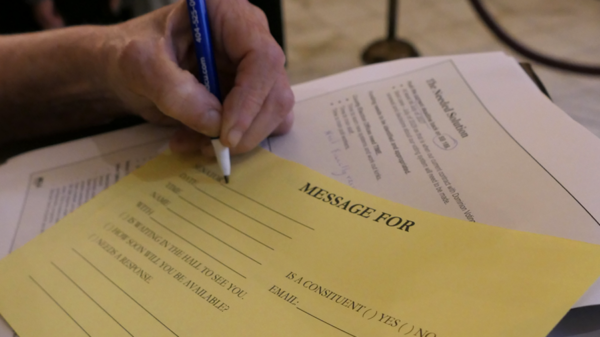
This session proved advocacy works. Every testimony, every call to a legislator, every postcard signed, and every volunteer shift shaped the outcome.
Conclusion
While the 2026 legislative session is over, the fight to protect civil liberties in Georgia is far from over. This year’s debates and decisions made clear that fundamental rights remain under threat, but also that organized, persistent advocacy makes a difference. When Georgians show up, democracy wins.
Blogs & Press Releases

Georgians ‘Pack the Cap’ to Kick Off 2026 Legislative Session

Board Member: A Call for Restraint as Political Rhetoric Heats Up in Georgia

Civil Rights on the Line as Georgia’s Legislative Session Picks Up Speed

Protecting Free Expression, Protest Rights as Bills Advance in Georgia Legislature
How Your Elected Officials Are Voting on Key Legislation

‘I Didn’t Feel Safe’: Georgia Librarians Speak Out Against SB 74