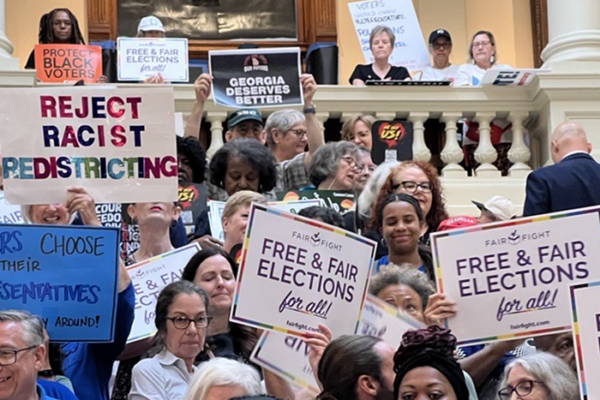
Georgia’s special session has ended, and after five brief legislative days, our election system remains intact due to an incredible showing of community pressure and mass mobilization.
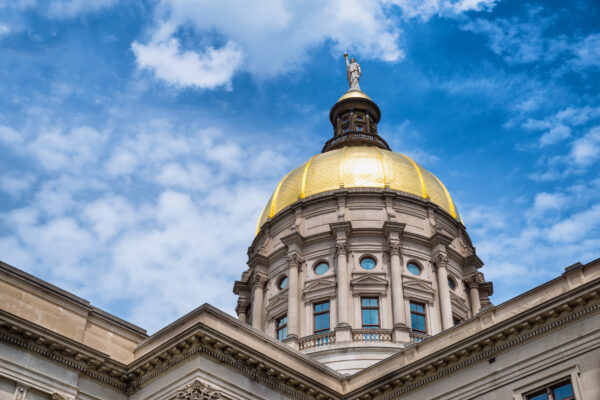
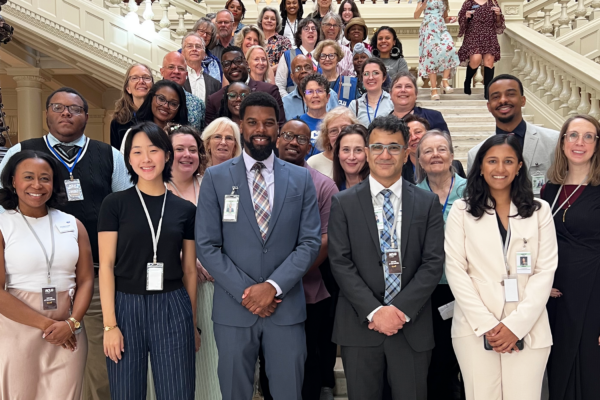
Voting rights supporters from all over the country rallied under the Gold Dome, and lawmakers had no choice but to respond.
Last month, Gov. Brian Kemp announced that he would be calling lawmakers back to the capitol following the U.S. Supreme Court's decision in Louisiana v. Callais, which weakened the Voting Rights Act and opened the door for states to gerrymander districts in ways that could diminish Black voting power.
Many feared Georgia would join other Southern states in rushing to redraw maps that erased Black districts. Instead, hours before the session began, legislative leaders sent a letter to the governor announcing they would not take up redistricting during the special session.
This announcement followed weeks of organizing and advocacy from voting rights groups, community members, and civil rights leaders who spoke out against efforts to redraw Georgia's maps and weaken Black political representation.
QR Code Deadline Pushed to 2028
In 2024, the General Assembly passed Senate Bill 189, requiring counties to stop using QR codes for official vote counting by July 1, 2026. Although the law set an aggressive deadline, it did not provide counties with funding or a clear implementation plan.
Election officials across Georgia repeatedly warned that the timeline was unrealistic and could create significant challenges for counties and voters.
Thankfully, during the special session, lawmakers passed SB 3EX, which extends the deadline for implementing the ban on QR code use until January 1, 2028.
We support the extension because it gives the state time to responsibly develop, fund, test, and implement a replacement voting system rather than rushing a major statewide transition without clear guidance.
SB 3EX also included an initial proposal that would have required counties to conduct hand recounts of ballots in the top races of virtually every election. Following concerns raised by election officials, voting rights advocates, and others, lawmakers significantly narrowed that requirement.
The final version of the bill limits mandatory hand recounts to certain statewide races where the margin is within .05%. While we remain concerned about expanding mandatory hand recounts, which are slower, more expensive, and more susceptible to human error than existing verification methods, the overall weakening of the bill is another testament to the power of community advocacy.
A Special Thanks to Our Volunteers
Thank you to our dedicated volunteers and capitol observers, dozens of whom monitored committee meetings, attended hearings, tracked legislation, shared information with their communities, and advocated for transparency and accountability from our legislators throughout the special session.
Your time, dedication, and persistence in protecting voting rights in Georgia make this work possible.
If you want to take action for free and fair elections in Georgia, we encourage you to join our Local Elections Advocates and Defenders (LEAD) program, a nonpartisan statewide election board monitoring program focused on observing and reporting on the activities and decisions made by election boards in our 159 counties. We recruit and train volunteers statewide to monitor local election administration, attend Board of Elections meetings, track issues impacting voters, and help strengthen democracy in communities across the state by ensuring that county officials are accountable to the people.
We hope you’ll join us for our next LEAD training on June 30 at 6 p.m. Register for the training here.
With the special session behind us, we’re focused on the upcoming midterm elections. The same organizing that led to success this session will be critical ahead of November’s election season.
We cannot be complacent in our recent wins, because there are many more wins to gain. Our team looks forward to winning them with you.