Written by: Maahi Sethi, Communications Intern
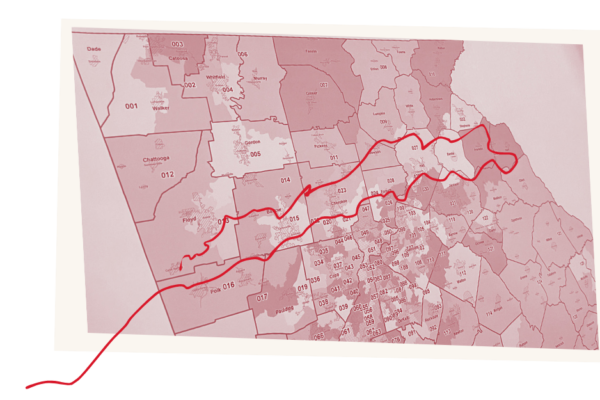
Who holds political power is determined long before a single ballot is cast. It can be decided by rough and ragged lines drawn on a map.
The battle over redistricting is not only a modern political debate; its roots are deeply embedded in the Civil Rights Movement and the long struggle for equal representation.
Every ten years, in accordance with the U.S. Census, states redraw congressional and legislative district lines to reflect shifts in populations, a process known as redistricting. When conducted properly, it ensures communities receive fair and equal representation. Yet when districts are drawn to manipulate or favor political interests, they can dilute the voting power of entire communities and undermine their ability to elect candidates of their choice.
To understand today’s debates over voting maps, we must look back in time to understand how lines on a map have been used to determine who gets to have power and who does not.
Post Reconstruction, multiple Southern states spread the Jim Crow system of segregation, and methods of supressing Black political participation. Poll taxes, literacy tests, and racial violence were all part of systemically excluding Black voters from the democratic process. Yet these weren’t the only voter suppression tactics that Southern politicians promoted. Political maps were drawn in such a way to dilute Black voting power. Due to this, Black communities often lacked meaningful political representation.
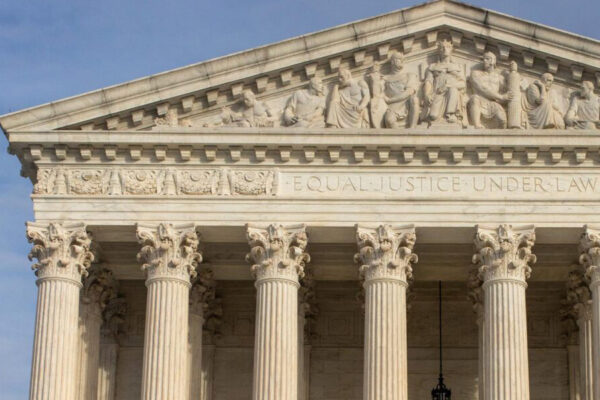
The Civil Rights Movement challenged many of these barriers, and the movement’s leaders also toiled to ensure that government and legal institutions had safeguards in place to dismantle systemic injustice in voting. A series of U.S. Supreme Court decisions in the 1960s established voter protections that required states to redraw districts in a manner that reflected population changes. One of the most significant laws in American history, the Voting Rights Act of 1965, reinforced these protections.
As Black voter participation increased, courts and lawmakers recognized that district lines had a central role to play in the voting power of marginalized communities. Majority-minority districts were created where racial groups made up a significant portion of voters. States with a history of racial discrimination, including Georgia, had to obtain federal approval before changing voting laws or redrawing districts.
However, in 2013, the Supreme Court’s decision in Shelby County v. Holder eliminated the federal requirement. Without that rule in place, the issues with redistricting took a new shape. States went from proactive prevention to reactive litigation after maps had been drawn.
Georgia is part of that struggle, immersed within an ethos of its rich civil rights history, and a broader national battle of voting rights. The Supreme Court’s decision in Louisiana v. Callais in early 2026 narrowed key protections for majority-minority districts under the Voting Rights Act. In June, Georgia’s governor called a special session where multiple voting rights issues, including redistricting, would be discussed.
Given a rising wave of redistricting in Southern states threatening to erase Black districts, many feared Georgia would be a target. Yet, hours before the special session began, many advocacy groups and local leaders rallied at the Capitol. Shortly after, state House Republicans announced that they would not take up redistricting during the special session.
While this decision paused immediate changes to Georgia’s maps, the fight over fair representation continues today, in courtrooms, in the state legislature, and in communities across Georgia.
Redistricting has been a long-standing struggle to ensure Black political representation. In the South, the history of redistricting is not just a story of maps. It is a story about access to power. The methods to dismantle voting power may evolve, but the fight for equal representation is far from over. In Georgia, that fight continues today.