Across Atlanta, residents are learning more about the surveillance technologies tracking their movements, asking who has access to their data, and demanding a say in how these tools are used.
From events like community bike rides and student-led walking tours to a march on Atlanta City Hall, we’ve heard from a wide range of Atlantans over the past year or so. Many of you feel strongly that decisions about surveillance should not happen without public input.
As city officials consider an ordinance governing police surveillance technology, we are pressing them for transparency, accountability, and a meaningful role in the process.
A council member proposed an ordinance this summer that now includes monthly audits that seem optional rather than mandatory and removes remedies for improperly collected data, among other issues. It gives the Mayor’s Office and Atlanta Police Department a lot of say while giving residents and the council little chance to check their work.
In response, we asked our supporters to contact the Public Safety and Legal Administration Committee to voice their concerns. Roughly 100 of you responded, asking city leaders to fight for real community input and council oversight. On Monday, Gael Nzeyimana, ACLU of Georgia’s community engagement manager, told the committee:
“Adopting the current ordinance would be a miscarriage of council’s oath to the community, at the expense of residents’ civil liberties.”
Despite the calls of the community, the ordinance passed out of the Public Safety committee and is headed to the executive committee. It will then go to full council for a vote in early December.
Why Atlanta Needs Improved Oversight
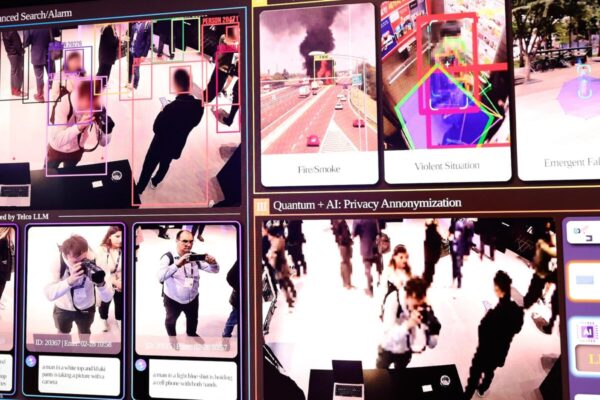
Atlanta is one of the most surveilled cities in America. An estimated 28,000 cameras monitor movement across the metro area, including license plate readers that record where people drive and when they pass a camera. The cameras and other associated systems collect and analyze data revealing where we go, who we spend time with, and what we do.
So, the ACLU of Georgia and community partners launched the Protect Our Privacy campaign to pass a Community Control Over Police Surveillance (CCOPS) ordinance in Atlanta.
CCOPS is not a ban on surveillance tech. It is a framework giving residents and elected officials a meaningful say before police acquire or use these tools. It requires transparency about how technologies work, what information they collect, who can access it, and how it may be shared.
Twenty-six cities nationwide have already adopted CCOPS ordinances, helping protect nearly 18 million people. Atlanta should have the same safeguards.
Taking the Conversation into Our Communities
Through 2026, the ACLU of Georgia and our coalition have brought the conversation about surveillance directly to Atlanta’s neighborhoods and people affected.
The events helped attendees see surveillance infrastructure for themselves, share concerns, and learn how to push for change.
Some highlights:
- Tour de Flock: Ride Through the Surveillance State: About two dozen cyclists joined us and Red, Bike, and Green for a community bike ride through Pittsburgh, Mechanicsville, and Grant Park. Participants searched for Flock cameras and showed how surveillance tech has become part of everyday life in historically Black neighborhoods.
- Atlanta University Center Flock Walk: About 70 students joined a student-led walking tour near the Atlanta University Center. We walked the area’s streets to identify surveillance cameras, learn how Flock technology works, and discuss its impact on young people. Students also talked about bringing their concerns to elected officials and making their voices heard at Atlanta City Hall.
- Doraville Flock Walk: Sixteen community members joined We Love Buford Highway Inc. to document Flock cameras along Buford Highway near the Doraville MARTA station. Together, we identified five or six cameras and discussed who can access the collected data. The conversation also introduced residents to CCOPS and concerns about the cameras’ use in immigration enforcement.
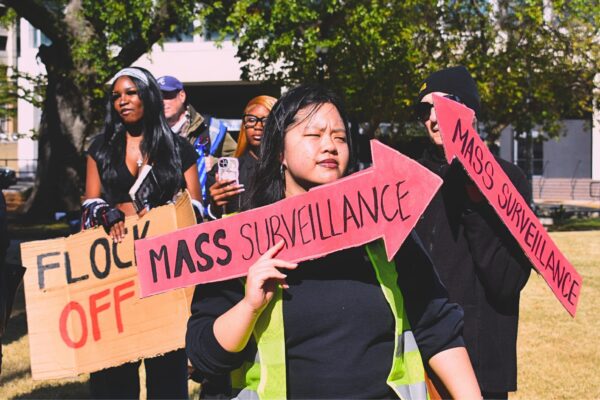
- March for Community Oversight of Mass Surveillance: On Nov. 16, 50 community members, ACLU of Georgia staff, and CCOPS supporters marched to Atlanta City Hall and attended a city council meeting. We called on leaders to adopt an ordinance that gives everyone a meaningful role in decisions about surveillance technology.
- Public comment trainings: Throughout the campaign, the ACLU of Georgia also held multiple trainings to help Atlantans prepare to speak at Atlanta City Council meetings.
The People Demanding Answers
The conversations at these events focused on people’s ability to move freely, learn, organize, and participate in their communities without feeling constantly watched.
At the Atlanta University Center Flock Walk, students spoke about the importance of education and collective action.
A’nija Hughley, president of Spelman College’s NAACP chapter, urged students to turn what they learned into action.
“We want AUC students specifically to come (to Atlanta City Hall) and make our voices heard because they think we’re apathetic. They think we don’t care. They think we don’t know that they’re watching us,” she said.
For Myana Garrison of Legacies of the Movement AUC, education is an important first step toward meaningful change. She encouraged students to learn about Flock cameras, share that knowledge, and get involved.
“If you have the belief that you can make change, then you can make change, and so can everybody else around you,” Garrison said.
Isaiah Tripp, a leader with Creative Rebels for Change, questioned the need for extensive surveillance around college campuses and called on students to resist systems that disproportionately monitor Black communities.
Hari, an Atlanta resident who participated in the Tour de Flock, described how seeing surveillance cameras firsthand changed his understanding of the city’s surveillance network.
“It’s one thing to hear about it, but to see it was scary,” he said. “It gives you the ‘1984’ feeling.”
Hari emphasized that if AI-powered cameras are here to stay, communities need more than symbolic oversight. They need civilian oversight with real regulatory power and accountability.
Their perspectives reflect a common concern: You shouldn’t be forced to accept constant monitoring without knowing how such technologies work, who has access to the data, or what protections exist against misuse.
The Fight’s Not Over
Atlanta has an opportunity to establish meaningful protections for residents, but the proposed surveillance ordinance must do more than give city officials and law enforcement control over most decisions.
Atlantans deserve opportunities to ask questions, express concerns, and support or oppose proposed technologies. The full city council should have authority to approve new surveillance technologies and vendor contracts, and the public should have access to regular audit results.
We expect statewide legislation addressing surveillance technology during Georgia’s 2027 legislative session. The ACLU of Georgia will keep you up to date about developments and opportunities to get involved.
Stay informed, talk with your neighbors, attend council meetings, and urge elected officials to support meaningful community oversight. Decisions about surveillance impact everyone, and people whose lives are monitored deserve a voice in those decisions.
You should not have to choose between public safety and your civil liberties.